Storm Debris Removal in Ocala — the Pile in Your Yard Has Three Destinations, and Only One Is Free
Every hauler in Florida takes the same calls the week after a storm, and most of them fudge the same point: whether your pile costs anything depends entirely on where it's headed — the county's curbside program (free, but only when it exists), mulched into the ground where it fell, or loaded and hauled to a disposal site. This page says which of the three you're in before anyone talks numbers.
County curbside or private haul-off — where the free option starts and stops
Free happens one way: Marion County activates storm-debris collection after a declared event, and your pile sits on a county-maintained right-of-way, stacked to that event's rules. Everything else — private roads, piles that miss the deadline, debris the program won't take — is a paid haul.
The county program is real, but it is conditional every single time. It stands up only after a declaration, and the specifics change with each storm: what counts as vegetative debris, how it has to be separated, cut lengths, pickup windows, which roads the contract trucks actually run. Marion County Solid Waste publishes the current rules when a collection is activated — read those, not a neighbor's memory of how Irma went. And if your parcel fronts a private road or sits down a flag drive off Maricamp in the Shores or out in Marion Oaks, the claw trucks generally are not coming to you at all. That is when it becomes a haul-off crew's job: loaded, hauled, and disposed of legally, with the destination named in the written quote.
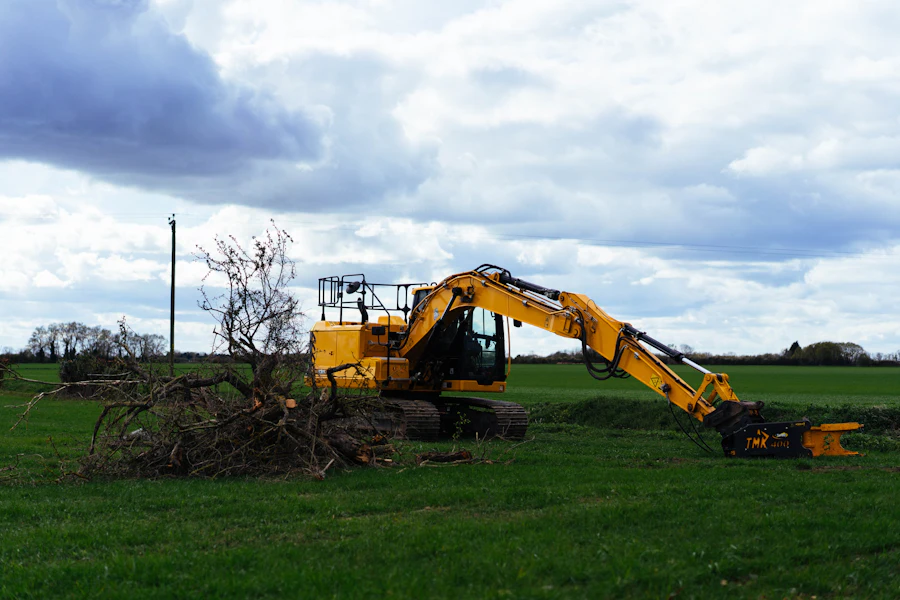
Mulched where it lies or trucked to the landfill — the half-acre versus forty-acre split
A homesite pile — one downed water oak, a fence line of limbs, a yard full of palm fronds — is usually cheapest loaded and hauled. Downed timber across real acreage is almost always cheapest mulched where it lies, because on big ground the trucking is what kills the budget.
Forty acres of snapped sand pine after a straight-line wind event is hundreds of truckloads if you insist on hauling it; a mulching head turns the same mess into ground cover in days. How the machine does that is its own page, and the per-acre mulching ranges — $1,500–$3,000 depending on density — are already on the public price chart. Haul jobs quote flat, by the load, in writing. One more thing the week after a storm: the ground is soaked. A tracked mulcher floats over wet Marion County sand where a loaded tandem ruts to the axles, and sometimes the honest schedule is "four dry days first." On scrub lots, check what the debris landed on, too — gopher tortoise burrows are state-protected, and a brush pile sitting over one changes how that corner gets worked.
Already on the ground or still hanging — a debris job versus a tree job
Anything already on the ground is a debris job, and it can be priced from a photo. Anything still attached, hung up in the canopy, or leaning under load is a tree job — it needs a climber or a bucket truck before anyone rakes a stick underneath it.
Marion County's storm signature makes this fork matter. Laurel oaks shed huge rotten-cored limbs that half-fall and lodge overhead; live oak limbs are so heavy that a hanger the size of your leg can kill; sand pines snap mid-trunk and leave the top bowed over like a loaded spring. Yanking a widow-maker down with a grapple from the ground is how debris crews get people hurt. If your pile still has pieces in the air, the crew will point at them and tell you to get a tree crew first — then everything on the ground gets handled afterward. That is not passing the buck; it is the only sane order of operations.
Burn pile or no burn pile — the Florida Forest Service makes that call, day by day
Open burning of vegetative debris in Florida happens under Florida Forest Service (FDACS) rules, and whether burning is authorized on a given day depends on current conditions — check the day's burn authorization status with the Forest Service before lighting anything.
After a storm, half the county has the same idea in the same dry week, which is exactly when authorizations tighten. Setback requirements from structures and roads still apply, and household junk mixed into a storm pile is never legal to burn. Mulching or hauling costs more than a match; it also keeps your name off an escaped-burn incident report.
A Marion County crew or the truck that appeared the day after landfall
Some of the out-of-town crews that roll in after a named storm are legitimate. The ones that generate the complaint files follow a pattern you can spot in the first five minutes:
- Cash demanded up front, before a single limb is moved.
- No written scope — nothing naming what gets taken, or where it goes.
- A price that grows once the trailer is loaded and your debris is leverage.
- A crew that won't name its disposal site. Debris dumped on a back road off CR 484 becomes somebody's legal problem — sometimes the person who paid for the "removal."
- Pressure to bundle roof, tree, and debris work into one signature on the tailgate.
We are not waving a badge here — just use the test that any local outfit passes without flinching: everything in writing, payment when the work is done, disposal site named. Whoever balks at those three, wave off, whatever their sign says. The crews worth calling are the ones with work when nothing has blown down — what the crew behind these quotes does in an ordinary week is stumps, clearing and mulching, and the storm pile is the exception.
The pile is not going to shrink on its own
Send the acreage and one photo of the pile — that is enough for the crew to say haul or mulch, and what it runs.
Request an Estimate